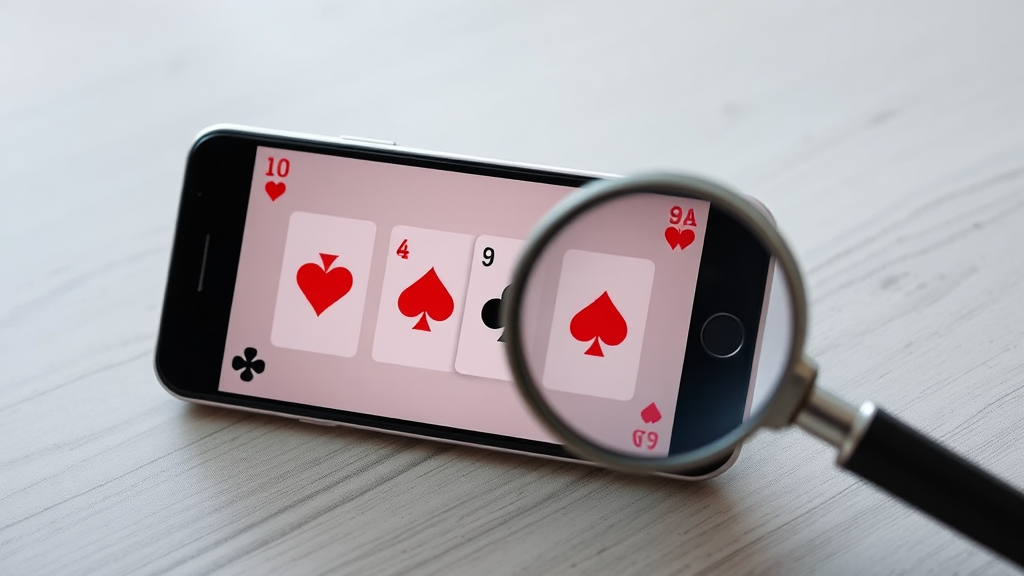
Rummy Game Online: A Practical Guide to Rules, Tables and Smart Play
Card games have a way of rewarding patience more than speed. That is exactly why so many players who enjoy a calm, skill-based challenge keep coming back to Rummy Game Online. Unlike games built purely on luck, rummy asks you to read your hand, track what has been discarded, and decide when to hold and when to fold. The online version of this classic game brings the same tension and satisfaction to a phone screen, with the added convenience of playing whenever you have a spare ten minutes.
This guide walks through how online rummy actually works, from the basic objective to the small decisions that separate a casual player from a consistent one. It is written for anyone who has seen the game mentioned in app directories or card-room listings and wants a clear, no-nonsense explanation before sitting down at a digital table.
What Makes Rummy Different From Other Card Games
Most popular card games are about beating opponents directly. Rummy is different because your real opponent is your own hand. The goal is to arrange the thirteen cards you are dealt into valid sets and sequences before anyone else does. You draw, you discard, and you gradually shape chaos into order.
That structure creates a specific kind of thinking. You are not bluffing or guessing what someone else holds as much as you are managing probabilities. Every discard pile tells a story. Every card you pick up is a small commitment. And every turn is a chance to improve your position or protect it.
Online rummy preserves all of this while adding conveniences that physical tables cannot match. You can see your hand clearly, sort it instantly, and review the discard pile without leaning across a table. For newer players, that clarity makes the learning curve gentler.
Core Rules You Need Before Your First Hand
Rummy rules are simple in outline but detailed in practice. Before you play, make sure you understand the following foundations.
The Objective
Arrange all thirteen cards into valid combinations. A valid combination is either a set of three or four cards of the same rank in different suits, or a sequence of three or more consecutive cards of the same suit. At least one sequence must be a pure sequence, meaning it contains no joker.
Drawing and Discarding
On your turn, you pick one card from either the closed deck or the open discard pile, then discard one card from your hand. This keeps your hand at thirteen cards and gives you a constant stream of choices.
Jokers
Most online variants use jokers to substitute for missing cards. A printed joker is a designated card, while a wild joker is chosen from the deck at the start of the game. Jokers can complete sets and sequences but cannot replace a card in a pure sequence.
Declaring
When your hand is fully arranged, you declare. The system validates your combinations. If everything is correct, you win the round. If not, you take a penalty, which is why it pays to double-check before declaring.
How Online Tables Are Structured
Online rummy rooms usually offer several table formats so players can choose based on time, comfort and experience. Understanding these formats helps you pick the right environment instead of jumping into a table that does not suit your pace.
Points rummy is the most common format for casual play. Each player starts with a set number of points, and penalties are deducted after every round. The player with the most points at the end wins. It rewards consistency rather than one lucky hand.
Pool rummy works differently. Everyone contributes to a central pool, and the winner takes the pool. Players who drop out lose their contribution. This format encourages longer, more strategic sessions.
Deals rummy is a fixed number of rounds. Once those rounds are complete, the player with the highest score wins. It is a good format if you want a clear end point.
Many apps also offer practice tables where no points are at stake. These are genuinely useful. They let you test a strategy without pressure and get comfortable with the interface before playing seriously.
Reading the Discard Pile Like a Player
New players often focus entirely on their own cards. Experienced players spend just as much attention on what everyone else is throwing away. The discard pile is a public record of what people do not need, and that information is valuable.
If a player discards a card that could have completed an obvious sequence, they are probably working on something else. If they suddenly pick up a card from the discard pile, that card likely fits a combination they are building. Watching these patterns gives you clues about what is safe to discard and what might feed an opponent.
You do not need to memorize every card. Just track the broad shape of the game. Are high cards being discarded early? Is someone collecting a particular suit? Small observations add up quickly.
Building Sequences Without Getting Stuck
The most common mistake in rummy is holding too many unconnected high cards. They feel valuable because of their rank, but if they cannot be grouped, they become penalties at the end of the round.
A better approach is to build around potential. Two consecutive cards of the same suit are more useful than two unrelated face cards. A pair of kings is promising, but a pair of kings plus a king from a different suit is even better because it opens the door to a set.
Keep an eye on your pure sequence requirement. You cannot declare without at least one. If you are several turns in and still do not have one, prioritize it over everything else. A hand with a pure sequence and two messy sets is closer to a win than a hand full of near-complete sets and no pure sequence.
When to Drop and When to Push
Not every hand is worth fighting for. Online rummy gives you the option to drop early, which limits your loss. Knowing when to use it is a skill in itself.
If your first few draws do not improve your hand and your opponents seem to be moving quickly, an early drop is often the smart play. You lose less than you would by dragging out a hopeless round.
On the other hand, if you have a strong middle game with multiple possible sequences, it is worth pushing. The key is to stay honest with yourself. Hope is not a strategy. If the cards are not cooperating, accept it and move to the next round with your points intact.
Managing Time and Attention at Digital Tables
One advantage of playing online is that you control your environment. There is no dealer waiting, no table pressure, and no need to rush. Use that to your benefit.
Play when you can concentrate. Rummy rewards clear thinking, and a distracted player misses obvious discards and forgets which cards have already been played. Short sessions with full attention beat long sessions with divided focus.
Also, take advantage of the sorting and arrangement tools most apps provide. A well-organized hand is easier to evaluate. If your cards are scattered, you will overlook combinations that are already sitting in front of you.
Finding Reliable Rummy Apps
There are many card apps available, and not all of them are equally clear about how they work. Before installing anything, check the app description, the rules it uses, and whether it offers a practice mode. A well-designed app explains its scoring, shows the joker rules clearly, and gives you a way to learn without committing points.
It also helps to compare several options side by side. Editorial directories that list and rank card apps can save time, especially when they include snapshots of what each app offers. The important thing is to verify the details yourself before playing, since app features and wording can change.
Common Mistakes That Slow Your Progress
Most players improve quickly once they stop making a few predictable errors.
- Declaring too early: Always confirm your pure sequence and check that no joker is doing work it cannot do.
- Ignoring the discard pile: It is free information. Use it.
- Holding dead cards: High cards that do not fit anything are liabilities, not assets.
- Playing tired: Rummy is a thinking game. Fatigue leads to careless discards.
- Chasing losses: If a session is going badly, stop. The next session is a fresh start.
Why Rummy Rewards Long-Term Thinking
Rummy is not a game you master in a day. It is a game you get slightly better at every time you play. The players who do well are not necessarily the ones with the best cards. They are the ones who make fewer mistakes, read the table more carefully, and know when to walk away from a bad hand.
That is also why online rummy appeals to a wide range of people. It is social enough to be fun, strategic enough to be engaging, and flexible enough to fit into a busy schedule. Whether you play a few practice rounds or settle into a longer session, the core challenge stays the same: turn thirteen random cards into something that works.
FAQ
Is online rummy a game of skill or luck?
It is a mix, but skill plays a large role. Luck determines what you are dealt, while skill determines how well you use those cards. Over many rounds, consistent decision-making matters more than any single draw.
How many cards do you get in rummy?
In the standard thirteen-card variant, each player receives thirteen cards. Some formats use fewer cards, so always check the rules of the specific table you join.
What is a pure sequence?
A pure sequence is three or more consecutive cards of the same suit with no joker used. You need at least one pure sequence to make a valid declaration.
Can I practice rummy without playing for points?
Yes. Many apps include practice or casual tables where you can learn the interface and test strategies without any stake. These are a good starting point for new players.
How do I choose a reliable rummy app?
Compare app descriptions, check the rules and scoring they use, and look for a practice mode. Editorial directories can help you shortlist options, but always verify the details yourself before playing.